
Sarasota's Design Trends: A Case Study on Coastal-Inspired Custom Kitchen Cabinet Styles
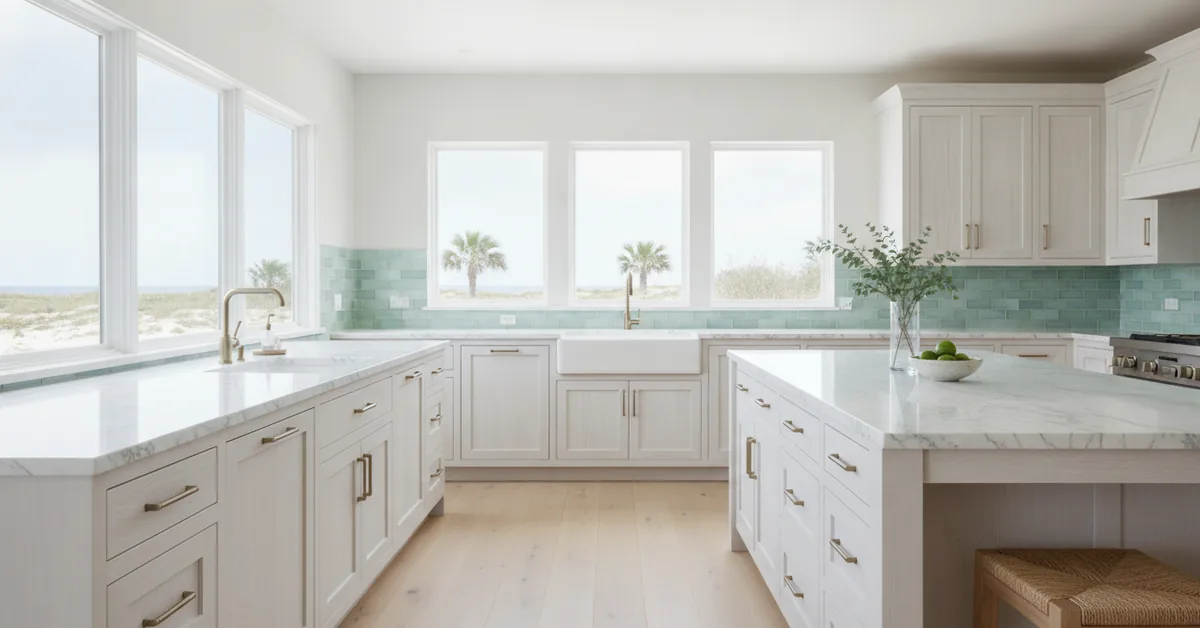
I was in a beautiful home on Lido Key last month, looking out at the turquoise water. The client handed me an inspiration photo of a stunning kitchen, all crisp white Shaker cabinets. It was gorgeous, but my eyes immediately went to the joints on the cabinet doors. I had to be the one to break the news: the solid wood construction in that photo, while beautiful in a dry climate, would likely lead to cracked paint lines and frustration within two Sarasota summers. This is the conversation I have almost weekly. True coastal design here isn't just about a color palette; it's a science of material stability against our relentless humidity.
The Blueprint for a True Sarasota Coastal Kitchen
Material Stability Over Tradition: Prioritize engineered materials like High-Density Fiberboard (HDF) for painted
- Material Stability Over Tradition: Prioritize engineered materials like High-Density Fiberboard (HDF) for painted cabinet doors. They offer superior stability in high humidity, preventing the hairline paint cracks common with solid wood stile and rail doors.
- Subtlety in Coastal Elements: Modern coastal design is about texture and light, not literal motifs. Think reeded glass inserts, subtle beadboard details on an island back, or a cerused oak finish rather than overt nautical themes.
- Hardware as Functional Jewelry: The hardware is critical. I'm seeing a strong move toward unlacquered brass and matte black finishes. These are not just functional pulls; they are statement pieces that contrast beautifully against light-colored cabinetry.
- Integrated and Concealed Functionality: High-end Sarasota kitchens hide the work. This means fully integrated, panel-ready appliances and clever storage solutions like appliance garages and pull-out pantries are no longer optional luxuries but standard expectations.
Why Your Dream 'Solid Wood' Painted Door Will Fail in Florida
Here's a truth that often surprises my clients: for a painted finish in a coastal environment, I almost always recommend HDF or a high-grade MDF composite door over solid wood. It feels counterintuitive. People associate solid wood with quality, and it is—for the right application. But a standard five-piece solid wood door has five separate pieces that expand and contract with changes in humidity. The stiles and rails move at a different rate than the center panel.
When you apply a beautiful, hard lacquer finish to that door, the wood underneath is still moving. The result? Within a year, and sometimes within a single season, you'll see hairline fractures in the paint right at the joints. It's not a defect in the finish; it's the nature of wood. An HDF door, being a single, stable substrate, doesn't have these joints. We can machine a perfect Shaker profile into it, and the painted finish will remain seamless and monolithic for years. It's not about cutting costs; it's about building for longevity in our specific climate.
The Evolution from 'Nautical' to 'Coastal Modern'
The term 'coastal kitchen' used to conjure images of seashell handles and navy blue everything. That's a dated look. The sophisticated Sarasota client today wants 'Coastal Modern' or 'Organic Coastal'. This is less about theme and more about feeling—creating a space that is light, airy, and connected to the natural landscape. I'm seeing a clear shift in cabinet styles and finishes that achieve this.
It's about layering textures. We might do perimeter cabinets in a soft, off-white paint and then introduce a rift-sawn white oak island with a light cerused finish. The wood grain brings warmth and an organic element that prevents the kitchen from feeling sterile. This textural contrast is the hallmark of a high-end coastal design today. The key is balance and restraint.
Comparing Cabinet Door Materials for a Sarasota Kitchen
| Material & Construction | Best Use Case | Humidity Stability | Typical Cost Index (Material Only) |
|---|---|---|---|
| Solid Wood (e.g., Maple, Poplar) | Stained finishes where grain is desired. Cabinet face frames and boxes. | Low to Moderate. Prone to expansion, causing paint cracks at joints. | 1.2x - 1.5x |
| HDF (High-Density Fiberboard) | Painted doors, especially Shaker or detailed profiles. End panels. | Excellent. A single, stable substrate with no joints to crack. | 1.0x (Baseline) |
| Rift-Sawn White Oak (Veneer) | Islands, accent cabinets, floating shelves. Provides a warm, organic texture. | Good. The rift-sawn cut is very stable, and high-quality veneers are reliable. | 1.8x - 2.5x |
| Thermofoil / Laminate | Budget-conscious projects, utility rooms. Often used in production homes. | Good, but can peel at edges over time with heat and moisture exposure. | 0.7x - 0.9x |
The Unsung Hero: Cabinet Interiors and Functional Hardware
What truly separates a custom kitchen from a standard one isn't just the doors you see, but the functionality you don't. A client on Siesta Key recently told me the most life-changing part of her new kitchen wasn't the quartzite countertops, but the custom pull-out spice rack I built next to her range. It sounds simple, but thoughtful interior organization is everything.
We build our cabinet boxes with a high-quality, pre-finished maple plywood, which is far superior to the particle board you'll find in semi-custom lines. Every drawer is dovetailed solid maple, running on undermount, soft-close slides from a brand like Blum or Grass. This is the machinery of the kitchen, and it's not a place to compromise. We design for specific needs: Are you a baker? We'll build in a heavy-duty mixer lift. Do you have a large family? We'll design a walk-in pantry with floor-to-ceiling shelving and roll-out trays. This level of personalization is the core of custom work.
Your Action Plan for Planning a Coastal Custom Kitchen
If you're starting to think about a kitchen remodel in the Sarasota area, here is the practical order of operations I guide my clients through.
- Define Your Function First: Before you pick a single color, think about how you use your kitchen. Where do you prep vegetables? Where do the kids do homework? We map out these work zones—prep, cooking, cleaning, storage—to create a layout that flows effortlessly. The classic 'work triangle' is still relevant, but we now think in terms of these larger zones.
- Select Materials for the Climate, Not Just the Look: Fall in love with an aesthetic, but be prepared to execute it with materials suited for coastal Florida. This is where you need to trust your cabinet maker. If they recommend HDF for your white Shaker doors, understand the technical reasoning behind it.
- Integrate Appliances Early: Don't wait until the cabinets are designed to choose your appliances. We need the exact specifications for the refrigerator, dishwasher, ovens, and cooktop from day one. A fully integrated, panel-ready refrigerator requires precision planning and can dramatically impact the cabinet layout and budget.
- Budget for Quality Hardware and Interiors: Allocate at least 10-15% of your total cabinet budget to hardware and interior fittings. This includes drawer pulls, hinges, drawer slides, and organizational inserts. It's the part of the kitchen you interact with every single day, and quality here makes a world of difference in user experience.
Frequently Asked Questions from My Sarasota Clients
- What is a realistic budget for a full custom kitchen cabinet project in Sarasota?
- It varies widely with size and materials, but for a medium-to-large kitchen, my clients are typically investing between $40,000 and $90,000 for the custom cabinetry alone. This includes design, fabrication, finishing, and installation. High-end projects with exotic veneers, extensive interior fittings, and multiple islands can exceed this. It's a significant investment, but well-built custom cabinets should last for decades.
- How do you handle the trend of open shelving in a coastal kitchen where dust and salty air can be an issue?
- I approach open shelving with strategic intent. Instead of replacing all upper cabinets, I use it as a specific design feature—perhaps a few thick, floating shelves in rift-sawn oak to display a curated collection of pottery or glassware. For clients concerned about dust, we often use upper cabinets with glass door inserts (reeded or seeded glass is popular) to give an open feel while keeping the contents protected from the elements.
- Can I still get a natural wood look without the instability of solid wood doors?
- Absolutely. This is where high-quality wood veneers shine. We can use a rift-sawn white oak or walnut veneer over a very stable engineered core. This gives you the beautiful, consistent grain of natural wood without the movement issues of a solid wood door. For islands, hoods, and accent walls, this is my preferred method to bring organic warmth into a coastal kitchen design.