
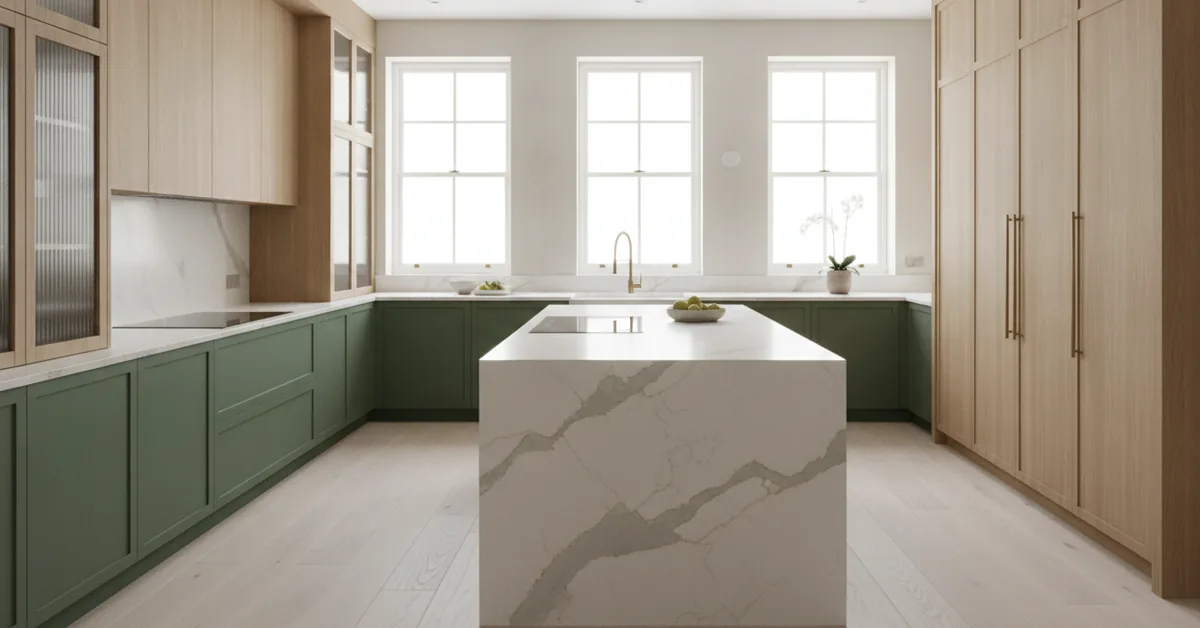
Lately, my workshop has smelled less like synthetic lacquer and more like raw white oak, linseed oil, and the sharp, metallic tang of precision-milled aluminum. Over the last year, a distinct shift has occurred on my drafting table: clients are no longer asking for the sterile, ultra-minimalist white boxes that dominated the early 2020s. Instead, they are chasing a tactile, highly functional warmth that demands exceptional craftsmanship to execute. As we look toward 2026, the kitchen is no longer trying to hide its identity as a culinary workshop; rather, it is celebrating it through structural honesty, advanced material engineering, and deeply integrated utility. The trends defining the coming year require us to look past superficial aesthetics and focus on how cabinetry behaves under the daily physical demands of a busy home.
The Core Structural Shifts Defining 2026 Cabinetry Design Tactile Micro-Textures Over High Gloss: Homeowners are
The Core Structural Shifts Defining 2026 Cabinetry Design
- Tactile Micro-Textures Over High Gloss: Homeowners are choosing wire-brushed finishes, deeply textured wood grains, and matte anti-fingerprint surfaces over flat, reflective planes.
- The Rise of "Warm Tech" Integration: Motorized pocket doors, discrete LED channels, and hidden charging docks are being built directly into the cabinet carcass rather than added as afterthoughts.
- Mixed-Material Elevations: We are combining natural timber with architectural metals like blackened steel, fluted glass, and engineered stone surfaces on a single elevation.
- The Death of the Standard Upper Cabinet: Traditional wall-to-wall uppers are being replaced by singular, dramatic architectural statement hoods flanked by asymmetrical floating shelves or shallow, counter-to-ceiling pantry towers.
The Inconvenient Truth: Why the "All-Natural" Wood Trend Demands Engineered Stability
In my consultations, clients almost universally express a desire for "100% solid wood cabinetry" to achieve the warm, organic aesthetic trending for 2026. This is where I have to step in with some hard cabinet-making realities. If you build a full kitchen of solid wood five-piece doors in a region with high humidity swings, those doors will warp, bind, and expand, throwing off your 3mm reveal lines within six months. The true luxury trend for 2026 is actually a masterclass in composite engineering.
To achieve the highly sought-after rift-cut white oak or walnut look without the structural failure, we are utilizing premium, marine-grade plywood or high-density fiberboard (HDF) cores wrapped in thick, book-matched architectural veneers. This method ensures that the engineered cabinet core remains completely inert while presenting the flawless, continuous grain flow of natural timber. For painted finishes, solid wood is also taking a backseat; high-refined HDF is the industry standard for custom doors because it does not expand or contract at the joints, preventing the dreaded hairline cracks in the paint film that plague solid maple doors.
The Material Matrix: Comparing 2026 Cabinetry Construction Standards
To help you navigate your upcoming remodel, I have broken down the actual material specifications we are using in the shop to balance aesthetic longevity with structural integrity. This is the behind-the-scenes reality of high-end cabinet construction:
| Material & Finish Type | Ideal Application | Pros (The Maker's View) | Cons / Limitations |
|---|---|---|---|
| Rift-Sawn Veneer on Marine Plywood | Exposed grain island back panels, tall pantry runs | Exceptional structural stability; allows for continuous grain-matching across multiple doors. | High material cost; requires highly skilled edge-banding execution. |
| Ultra-Refined HDF with Polyurethane Paint | High-traffic perimeter base cabinets, wet zones | Flawless, smooth surface; zero joint movement; highly resistant to moisture penetration. | Cannot be stained; chip repairs require professional spraying rather than simple touch-ups. |
| Anodized Aluminum Frame with Ribbed Glass | Upper accent displays, integrated bar units | Incredibly lightweight; provides architectural contrast; hides interior clutter while letting light through. | Shows fingerprints on metal edges; expensive custom fabrication lead times. |
The Rise of "Super-Pantries" and Hidden Prep Zones
One of the most profound behavioral patterns I have observed in high-end homes over the last two years is the desire to keep the main kitchen looking entirely sculptural and uncluttered, even during heavy meal preparation. This has given rise to the "working pantry" or "dirty kitchen" trend, which will reach its peak in 2026.
Instead of scattering small appliances across the main perimeter countertops, we are designing massive, flush-to-the-wall pantry systems utilizing heavy-duty pocket door hardware, such as the Hawa Concepta system. These doors glide out and slide completely back into the cabinet carcass, revealing a fully functional secondary workspace complete with an auxiliary sink, built-in espresso station, and microwave drawer. When the dinner party begins, the host simply slides the doors shut, instantly restoring the kitchen to a pristine, gallery-like state. This trend requires meticulous internal cabinet engineering to handle the heat and moisture generated by these hidden appliances, necessitating integrated ventilation fans and automatic safety shut-off switches wired directly to the door hinges.
A Lesson from the Shop: The Danger of Oversized Drawers
I want to share a quick story from a project we completed in late 2024 that perfectly illustrates a common design trap. The client insisted on ultra-wide, 48-inch drawer bases across the entire perimeter of their kitchen to achieve a clean, horizontal line. They wanted to store heavy cast-iron Dutch ovens and ceramic dishware sets inside them.
While modern soft-close undermount runners like Blum Movento are rated for up to 170 pounds, an oversized drawer loaded to capacity puts immense lateral stress on the drawer box joints and the runner synchronization mechanisms over time. Within months, the drawer fronts can sag slightly, disrupting those perfect 3mm gaps. In 2026, we are steering clients toward a more balanced approach: using internal nested drawers (drawers-within-drawers) or dividing those massive spans into highly engineered 30-inch or 36-inch drawer banks. This maintains structural longevity without sacrificing the clean, horizontal aesthetic.
How to Plan Your Cabinetry Layout Today: A Master Maker's Guide
If you are planning a kitchen renovation for 2026, do not start with paint colors or hardware styles. Follow this sequence of practical steps to ensure your cabinetry is as structurally sound as it is beautiful:
- Map Your Storage by Weight and Frequency: Before designing a single box, list your heaviest items (cast iron, stand mixers, stone mortar and pestles). Assign these to heavy-duty base drawers with reinforced 5/8-inch drawer bottoms, rather than standard 1/4-inch bottoms.
- Specify the Right Core Materials: Demand Baltic birch plywood or high-grade cabinet plywood for your cabinet boxes (carcasses). Do not accept standard particleboard, especially in areas near the sink, dishwasher, or refrigerator where slow water leaks can cause particleboard to swell and disintegrate.
- Design the Lighting Integration Early: 2026 cabinetry relies heavily on integrated LED lighting. This means your cabinet maker must mill precise channels into the underside of upper cabinets, shelves, and even inside drawer boxes before the cabinetry is finished and assembled. Retrofitting LED tape light always looks messy.
- Select Hardware Based on Duty Cycle, Not Just Finish: Insist on top-tier, European-engineered hardware (such as Blum, Grass, or Salice). The hinge is the single hardest-working mechanical part of your kitchen; cutting corners here to save a few hundred dollars will result in sagging doors and failed soft-close mechanisms within a few years.
Frequently Asked Questions About 2026 Cabinetry Design
- Is the shaker door style completely dead for 2026?
- No, but it has evolved significantly. The traditional wide-stile shaker door is being replaced by the "micro-shaker" or "slim-shaker," which features a delicate 3/8-inch to 1/2-inch stile and rail profile. This offers a much cleaner, more transitional aesthetic that bridges the gap between traditional craftsmanship and modern minimalism.
- How do I clean and maintain the textured wood finishes trending in 2026?
- Wire-brushed and matte-finished wood cabinets should never be cleaned with harsh chemical sprays or wax-based polishes, which can build up in the micro-grooves and attract dust. Instead, use a soft microfiber cloth slightly dampened with warm water and a drop of pH-neutral dish soap, wiping in the direction of the wood grain, followed immediately by a dry wipe.
- Why are custom cabinets so much more expensive than semi-custom options?
- True custom cabinetry is built to the millimeter to fit your specific architectural space, eliminating the need for ugly filler strips. Furthermore, custom shops use superior construction methods—such as doweled or mortise-and-tenon joints, premium grade-A veneers, and hand-applied, multi-step finish processes that are far more durable than the thin, assembly-line coatings found on semi-custom box cabinets.