
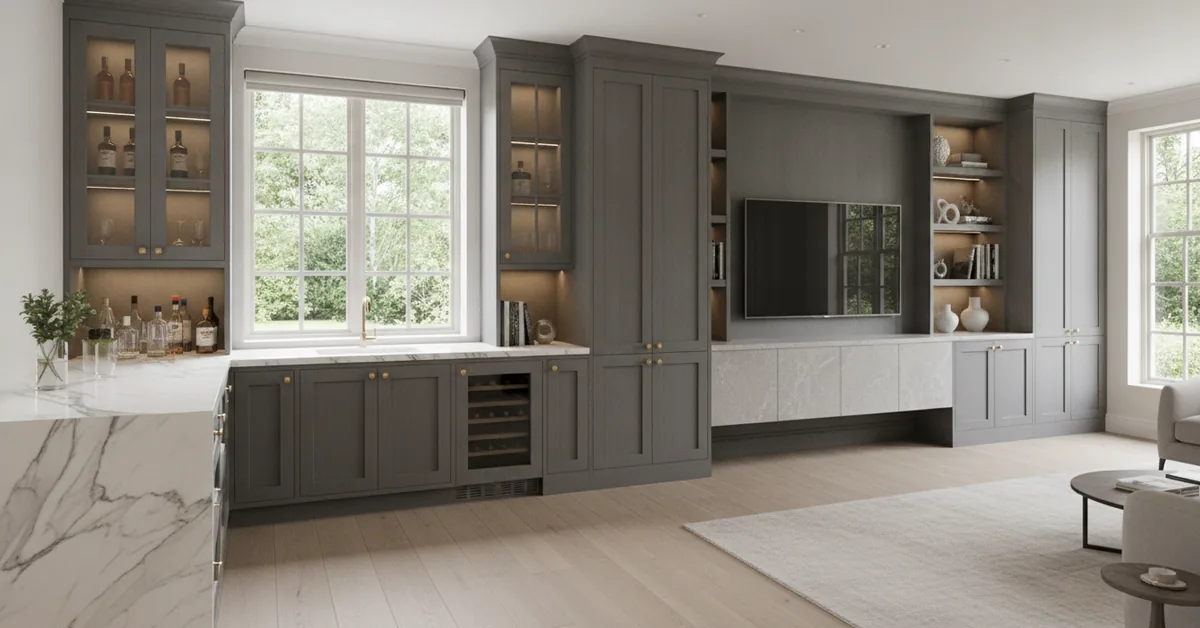
I see it all the time. A client comes to me with a beautiful photo of a home bar—gleaming countertops, perfect mood lighting, a stunning display of glassware. They want *that*. But when I start asking questions about how they plan to use it—where the ice will come from, how they'll wash glasses, or where the less-attractive-but-essential bottles of sour mix will live—I often get a blank stare. The most beautiful entertainment cabinetry is useless if it's a nightmare to actually entertain with. We've become so focused on the 'look' that we've forgotten the 'feel' of a space in use, and that's where true custom design makes all the difference.
The Blueprint for Functional Entertainment Cabinetry
Function Before Form: The first step is always to map the workflow. For a bar, this means considering the sequence of
- Function Before Form: The first step is always to map the workflow. For a bar, this means considering the sequence of making a drink. For a media room, it's about airflow for electronics and managing cables. Aesthetics should enhance function, not hinder it.
- Material Science is Non-Negotiable: The choice between solid wood, veneer, and high-pressure laminate isn't just about budget. It's about durability against moisture in a bar, and acoustic properties and heat resistance in a media center.
- Integrate Technology from Day One: Planning for outlets, cable runs, ventilation fans, and smart lighting isn't an afterthought. It must be integrated into the cabinet design from the initial sketches to avoid costly and ugly retrofitting.
- Lighting is a Tool, Not Just an Accessory: The right lighting transforms a space. We need to think in layers: task lighting for the work surfaces of a bar, ambient lighting to set the mood, and accent lighting to highlight displays.
The Bartender’s Triangle: Designing for Workflow, Not Just Looks
In kitchen design, we talk about the work triangle (sink, stove, refrigerator). For a home bar, I apply a similar principle I call the 'Bartender’s Triangle': Storage, Prep, and Service. Your cabinetry must connect these three zones seamlessly. I once had a client who insisted on a gorgeous, solid walnut bar top with an under-mount sink located at the far end, away from the ice maker and main prep area, simply for visual symmetry. Within a month, he called me frustrated. He was constantly dripping water across his beautiful, and now water-stained, walnut top just to make a single cocktail. We ended up retrofitting a smaller prep sink in the main zone—a costly lesson.
The core of a functional bar is efficient movement. Your primary prep surface should have your ice bin, sink, and garbage pull-out within arm's reach. You shouldn't have to take more than one step. Frequently used spirits and glassware should be in open shelving or upper cabinets directly above this zone. The less-used, bulkier items can go in lower cabinets. This workflow-centric approach is the difference between a bar that gets used every weekend and one that just collects dust.
Beyond the Box: Technical Needs of the Modern Media Center
A media cabinet is no longer just a stand for a television; it's a piece of technical furniture. The biggest failure I see in mass-produced units—and even some custom jobs—is a complete disregard for ventilation. Modern A/V receivers, amplifiers, and gaming consoles generate a tremendous amount of heat. Enclosing them in a tight cabinet without proper airflow is a recipe for disaster, leading to thermal throttling and a shortened lifespan for your expensive equipment.
When I design a media center, the first thing I ask for is the spec sheet for every component. We need to plan for depth, width, and most importantly, a clear path for air to flow. A passive system requires at least 2-3 inches of clearance on all sides and an open back, but for high-end gear, an active system is better. This involves integrating ultra-quiet, thermostatically controlled fans into the cabinetry itself, which turn on only when needed. It’s a small detail that protects a five-figure investment in electronics.
Material Selection: Aesthetics vs. Performance in Entertainment Spaces
Choosing the right material goes far beyond color and grain. In a bar, you're dealing with moisture, alcohol spills, and citrus acids. In a media room, you're concerned with acoustics, vibration, and durability. Here’s a breakdown of how I guide my clients.
| Material | Best Use Case (Entertainment) | Key Consideration | Typical Price Point |
|---|---|---|---|
| Solid Wood (e.g., Walnut, Oak) | Bar tops (with proper sealing), decorative frames, and doors. | Can be susceptible to water marks and scratches if not maintained. Offers a premium, warm feel. | High |
| Wood Veneer Plywood | Cabinet boxes, large panels, and doors for media centers. | More stable than solid wood, less prone to warping. Excellent for achieving a consistent grain pattern on large surfaces. | Medium-High |
| High-Pressure Laminate (HPL) | Bar work surfaces, interior of wet-bar cabinets. | Extremely durable, waterproof, and resistant to stains and scratches. The aesthetic options have improved dramatically. | Medium |
| MDF (Medium-Density Fiberboard) | Painted surfaces, especially Shaker-style doors for media units. | Provides a perfectly smooth, stable substrate for paint. Poor moisture resistance unless properly sealed, so not ideal for wet areas. | Low-Medium |
Putting It All Together: Your Action Plan
Ready to start planning? Don't just collect photos of finished rooms. Think about the mechanics of how you'll use the space. Here is the process I walk my clients through.
- Inventory Your Life: Before any design begins, make a detailed list. For a bar, list every bottle, type of glassware, and tool you own or plan to buy. For a media room, list every electronic component with its exact dimensions and wiring needs (HDMI, speaker wire, power).
- Map Your Movements: Stand in the empty space and walk through the motions. Pretend to make a drink. Where do you reach for a glass? Where do you get ice? Where do you throw away a lime wedge? For the media room, where will you store controllers, media, and headphones? This physical mapping reveals functional flaws before a single piece of wood is cut.
- Plan for Power and Light: Mark out exactly where you need outlets, USB ports, and lighting. Consider in-cabinet lighting, under-shelf task lighting for a bar, and dimmable accent lights for displays. Do this now, not when the drywall is closed up.
- Consult a Professional Early: Bring your inventory lists and workflow maps to a cabinet maker or designer. A true craftsman won't just build what you ask for; they will use their experience to refine your ideas, point out potential problems, and suggest solutions you hadn't considered.
Frequently Asked Questions from My Workshop
- How do you properly hide wires in a floating media cabinet without it looking bulky?
- The key is a recessed channel or a false back within the cabinet design. We build the cabinet with a 1.5 to 2-inch void at the back. We then drill holes through the true back of the cabinet into this void for cables to pass through. All the wiring runs within this hidden channel to a single, consolidated wall port, which is also hidden behind the unit. This keeps everything accessible but completely invisible from the front and sides.
- What's the most durable and practical countertop for a home bar that still looks high-end?
- While marble is beautiful, it's a nightmare for a bar as it etches easily with acids from wine or citrus. For the ultimate combination of luxury and durability, I consistently recommend quartzite. It has the natural veining and depth of marble but is incredibly hard and non-porous, making it highly resistant to staining and etching. For a more budget-conscious but still bulletproof option, a high-quality quartz composite (like Caesarstone or Silestone) is an excellent choice.
- Should I include a small refrigerator or wine cooler in my media room cabinetry?
- From a purely functional standpoint, I advise clients to think carefully about this. Refrigeration units, even quiet ones, produce ambient noise and vibration that can be distracting during a movie. They also generate heat from their compressors, which adds to the thermal load inside the cabinetry. If you must have one, I recommend isolating it in a separate cabinet bay with dedicated ventilation and sound-dampening materials to minimize its impact on the audio-visual experience.