

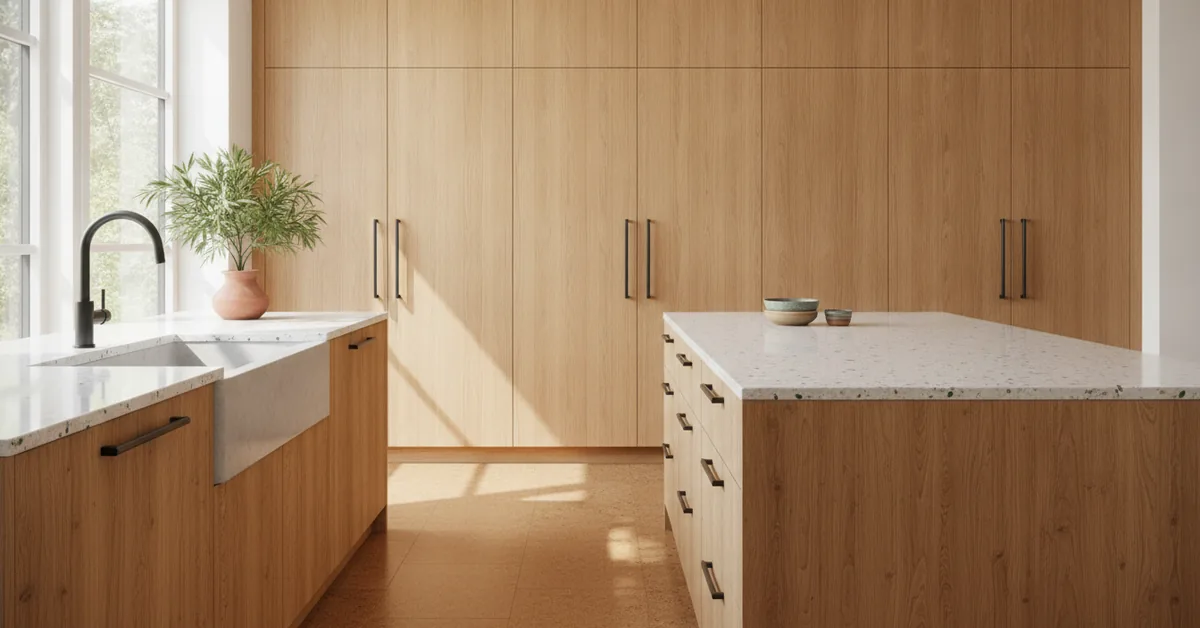
I've seen the term "eco-friendly" get thrown around so much in the kitchen design world that it's almost lost its meaning. A client recently showed me a brochure for "green" cabinets that were, upon closer inspection, just standard particleboard with a thin, questionably sourced veneer. The truth is, genuine sustainability in cabinetry isn't about a label; it's a chain of custody, from the forest to the finish. It requires a deeper look into how a material is harvested, processed, and how it will perform in your home for the next 30 years. Let's cut through the greenwashing and talk about what really makes a cabinet material sustainable.
The Blueprint for a Truly Sustainable Kitchen Cabinetry Project
Lifecycle Over Labels: Prioritize materials that are not only sourced responsibly but are also durable enough to last
- Lifecycle Over Labels: Prioritize materials that are not only sourced responsibly but are also durable enough to last decades, reducing the need for replacement. A cabinet that fails in ten years, no matter how "green" its origin, is not a sustainable choice.
- Hardware and Finishes Matter: The core material is only part of the equation. Low-VOC (Volatile Organic Compound) finishes, water-based stains, and hardware made from recycled metals are critical components of a truly eco-conscious kitchen.
- Local Sourcing is a Superpower: Whenever possible, sourcing lumber from well-managed local forests drastically cuts down the carbon footprint associated with transportation. It also supports local economies and gives you a tangible connection to your materials.
- Engineered Woods Aren't the Enemy: High-quality, formaldehyde-free engineered panels like Medite II or PureBond Plywood often outperform solid wood in stability and make more efficient use of wood resources. The key is in the adhesive and the manufacturing process.
Reclaimed Wood: The Soul of Sustainability, With a Catch
There's nothing quite like the character of reclaimed wood. I once built a set of kitchen uppers from the floor joists of a 19th-century barn in upstate New York. The nail holes, the tight grain of old-growth timber—you can't replicate that. From a sustainability perspective, it's the gold standard; it's carbon-negative, diverting material from landfills. However, it's not a straightforward process. The wood needs to be de-nailed, kiln-dried to stabilize it for an indoor climate, and milled. This labor-intensive process means the cost can be 50-100% higher than new high-grade lumber. Furthermore, the supply is inconsistent. You can't just order 200 board feet of 150-year-old reclaimed white oak; you work with what your supplier finds. This material is best suited for statement pieces like an island or accent cabinets rather than an entire kitchen, unless the budget is substantial.
FSC-Certified Lumber vs. Bamboo: A Performance Showdown
This is where most of my clients find the sweet spot between sustainability and practicality. Forest Stewardship Council (FSC) certification ensures that the wood comes from a responsibly managed forest, protecting biodiversity and indigenous rights. It's the most reliable certification I trust. On the other hand, we have bamboo. It's often marketed as the ultimate green material because it's a rapidly renewable grass. While true, the story is more complex.
Most cabinet-grade bamboo is grown and processed in Asia, involving significant shipping and, often, adhesives containing urea-formaldehyde. While formaldehyde-free options exist, you have to specifically ask for them. In my shop, I've noticed that while high-quality carbonized bamboo is very hard, it can be prone to chipping during fabrication and installation if not handled with extreme care. FSC-certified domestic hardwoods like Maple, Cherry, or White Oak offer a more predictable and often lower-carbon-footprint alternative.
| Material | Primary Benefit | Key Drawback | Typical Cost Index (vs. Standard Maple) |
|---|---|---|---|
| FSC-Certified Hardwood (e.g., Maple, Oak) | Proven durability, reliable sourcing, classic aesthetic. | Slower regrowth cycle than alternatives. | 1.1x - 1.3x |
| Reclaimed Wood (e.g., Antique Pine, Oak) | Unmatched character, diverts waste, carbon negative. | High cost, inconsistent supply, intensive labor. | 1.8x - 2.5x |
| Bamboo (Plyboo) | Rapidly renewable, unique modern look. | High transportation footprint, potential for formaldehyde, can be brittle. | 1.4x - 1.7x |
| Formaldehyde-Free MDF/Plywood (e.g., PureBond) | Dimensionally stable, efficient use of wood fiber, excellent paint surface. | Perception as a "lesser" material, lower screw-holding strength than solid wood. | 0.9x - 1.1x |
The Unsung Hero: Formaldehyde-Free Engineered Panels
I get a lot of initial resistance when I suggest engineered panels for a high-end kitchen. The mind immediately goes to cheap, swelling particleboard from a flat-pack store. But the materials I'm talking about are in a different league entirely. Products like PureBond plywood use a soy-based, formaldehyde-free adhesive, making them safer for indoor air quality. For painted cabinets, a high-grade, moisture-resistant MDF (Medium Density Fiberboard) is actually my preferred substrate for doors. Why? It's perfectly stable. A solid wood five-piece door will expand and contract with humidity changes, eventually causing hairline cracks in the paint at the joints. A one-piece MDF door, routed on a CNC machine, has no joints to fail. It provides a flawless, durable painted finish that will look perfect for years. This is a case where the engineered product isn't just more sustainable (it uses wood waste), it's functionally superior for the application.
Your Action Plan for a Sustainable Cabinet Project
When you're ready to start your project, here are the steps I walk my own clients through to ensure we are making genuinely responsible choices.
- Vet Your Cabinet Maker: Ask them directly about their suppliers. Do they have access to FSC-certified lumber? Can they source formaldehyde-free sheet goods? Ask to see certifications. A reputable shop will have this information ready.
- Prioritize Low-VOC Finishes: The most sustainable wood in the world can be ruined by a toxic, high-VOC lacquer. Insist on water-based or low-VOC conversion varnish finishes. They are incredibly durable now and won't off-gas harmful chemicals into your home.
- Design for Longevity: Timeless design is sustainable design. Avoid hyper-trendy layouts or materials that will feel dated in five years. Classic styles like Shaker or simple slab doors, built with quality materials and hardware, will last a lifetime, which is the ultimate goal.
- Request a Sample Door: Before committing to an entire kitchen, get a sample door made with your chosen material and finish. See how it looks in your home's light, feel its weight, and inspect the joinery. This small investment up front prevents costly regrets.
Frequently Asked Questions from My Clients
- Is it better to refinish my old cabinets instead of buying new sustainable ones?
- In almost all cases, yes. If your existing cabinet boxes are structurally sound (especially if they are older plywood construction), refinishing or refacing is by far the most sustainable and cost-effective option. You can replace the doors and drawer fronts with a new sustainable material and have the boxes painted or veneered to match. This saves an enormous amount of material from the landfill and significantly reduces the project's carbon footprint.
- What about hardware? How can I make a sustainable choice there?
- This is an often-overlooked detail. Look for hardware manufacturers that use a high percentage of recycled content in their metals (brass, steel, and aluminum are common). Additionally, choose a high-quality brand like Blum or Grass for your hinges and drawer slides. Their products are engineered to last for decades, meaning you won't be replacing broken hardware and sending more metal to the landfill in ten years. A lifetime guarantee on functional hardware is a good sign of a sustainable product.
- Are wheatboard or sunflower seed panels a viable option for kitchen cabinets?
- These are known as agrifiber boards, and while their story is compelling—using agricultural waste instead of wood—I am cautious about using them for full cabinet construction in a kitchen environment. My experience is that their moisture resistance and screw-holding capacity are not yet on par with wood-based panels or solid wood. They can be a fantastic choice for a dry application like a closet system or media unit, but I would hesitate to hang a heavy upper cabinet full of dishes from a wheatboard box until the technology improves further.