
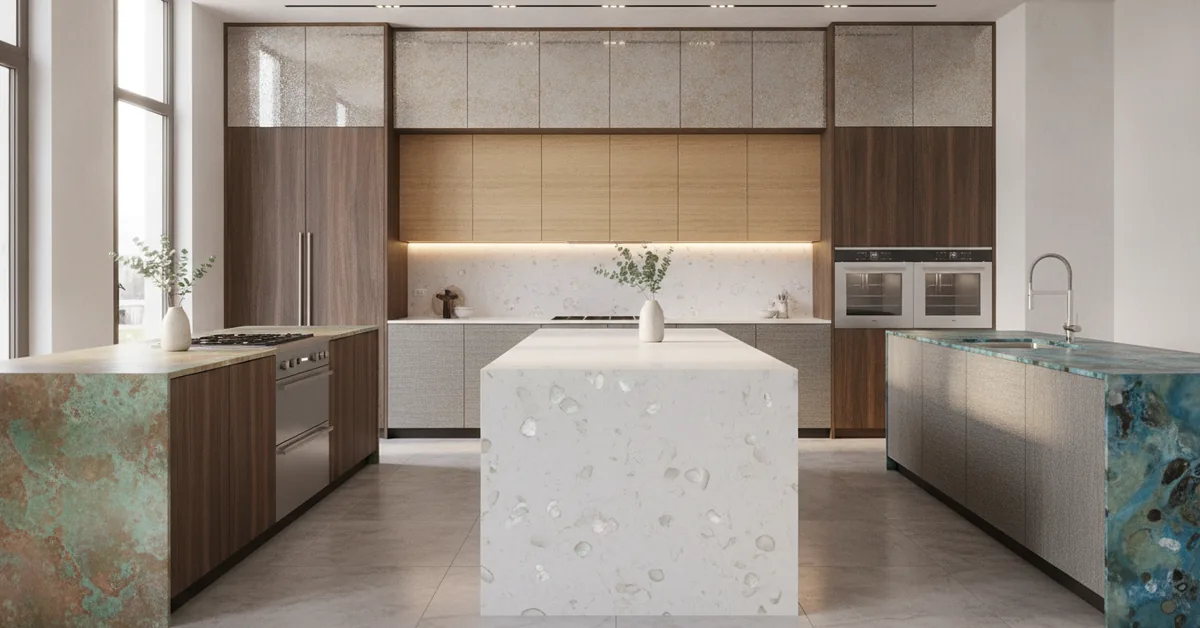
For years, the conversation around custom kitchen cabinets was deceptively simple: solid wood versus MDF, with a few veneer options thrown in. But I've seen a quiet revolution happening in my workshop and in the high-end homes I design for. Clients are no longer just asking for a color; they're asking for a texture, a specific light reflection, and a level of durability that traditional materials struggle to provide. The real innovation isn't about replacing wood entirely, but about leveraging engineered materials that solve the practical problems—fingerprints, scratches, and warping—that have plagued homeowners for decades. The future of luxury kitchen design is tactical, technical, and surprisingly sustainable.
A Craftsman's Quick Guide to Modern Cabinet Materials
- Beyond Wood's Limitations: Understand that innovation isn't anti-wood; it's about using engineered materials like Fenix and PET for specific, high-performance applications where solid wood would fail, such as in humid environments or for achieving super-matte, seamless finishes.
- The Rise of Textured Surfaces: The biggest shift I see is the move from flat color to integrated texture. Materials like Textured Melamine and Sintered Stone offer the visual depth of natural materials with superior consistency and durability.
- Focus on Core Composition: The surface material is only half the story. The substrate it's bonded to—whether it's premium MDF, moisture-resistant particleboard, or a composite—is what determines the cabinet's longevity and stability.
- Sustainability is Now a Performance Metric: Recycled materials like PET and products with certified sustainable cores are no longer a niche request. They are becoming a standard expectation for high-end projects, linking environmental responsibility with cutting-edge design.
1. Fenix NTM: The Self-Healing Super-Matte
When Fenix first hit the market, I was skeptical. A surface that could "heal" micro-scratches with heat? It sounded like a gimmick. Then I put a sample through its paces in my shop. Using an iron and a damp cloth, I watched minor abrasions literally disappear. This isn't magic; it's nanotechnology. Fenix NTM (NanoTech Matte) uses acrylic resins hardened by an electron-beam curing process. The result is a non-porous, anti-fingerprint, soft-touch surface that is incredible for modern, minimalist kitchens. I recently used it in an all-black kitchen for a client who cooks constantly and has two young children. Six months later, the cabinets look untouched. Its Achilles' heel is cost and fabrication—it requires specialized tooling and expertise to edge-band perfectly, as a poor seam will ruin the entire seamless aesthetic.
2. PET (Polyethylene Terephthalate): The Eco-Friendly High-Gloss
PET is a material many of us know from water bottles, but in cabinetry, it's a game-changer. It's a thermoplastic polymer laminate applied to an MDF or particleboard core. What I value about PET is its flawless, mirror-like high-gloss finish that is far more durable and consistent than traditional lacquer. Lacquer can chip and yellow over time, especially with exposure to UV light. PET, on the other hand, is UV-stable and highly scratch-resistant. It's also more environmentally friendly, as it's recyclable and doesn't involve the VOCs (Volatile Organic Compounds) associated with spray-finishing. I often recommend it for clients who want that ultra-sleek European look but are concerned about the environmental impact and long-term durability of painted finishes.
3. Textured Melamine (TFL): The Evolution of the Laminate
Forget the flat, cheap-looking melamine of the past. Today's Thermally Fused Laminate (TFL), or textured melamine, is a different beast entirely. Using advanced printing and embossing technology, manufacturers can create panels that have the deep texture and visual grain of real wood, linen, or even concrete. I recently completed a project in a coastal home where humidity makes solid wood a risky proposition due to expansion and contraction. We used a TFL with a deep, wire-brushed oak texture. The result was indistinguishable from real rift-sawn oak from a few feet away, but it will remain perfectly stable and won't warp or crack with the seasonal humidity swings. It's a pragmatic choice for achieving a specific aesthetic without the inherent instability of natural materials.
4. Sintered Stone & Porcelain: The Indestructible Door Front
While we've used these materials for countertops for a while, their application on cabinet fronts is a newer, high-end trend. Sintered stone (brands like Dekton or Neolith) is made by fusing natural minerals under extreme heat and pressure. The result is a slab that is nearly indestructible: it's heat-proof, scratch-proof, UV-stable, and completely non-porous. I've used thin 4mm or 6mm slabs laminated onto a stable core to create cabinet doors that flow seamlessly with the countertops. This is a technically demanding application—the weight requires heavy-duty hardware, and the cost is significant. It’s not for every project, but for a true statement kitchen where durability is paramount, there is nothing that performs better.
Comparing the Top 4 Modern Cabinet Materials
| Material | Primary Advantage | Best For | Typical Cost (per sq. ft. of finished door) | Craftsman's Note |
|---|---|---|---|---|
| Fenix NTM | Anti-fingerprint, self-healing, super-matte | Modern, minimalist, high-touch areas | $120 - $180 | Requires expert fabrication for seamless edges. Not a DIY-friendly material. |
| PET Laminate | Flawless high-gloss, UV-stable, eco-friendly | Sleek, European-style kitchens | $90 - $140 | The quality of the MDF core is critical for a perfectly flat, ripple-free reflection. |
| Textured Melamine (TFL) | Realistic texture, stable, budget-friendly | Wood-look in humid climates, commercial spaces | $60 - $100 | Look for products with high-quality, synchronized embossing for the most realistic effect. |
| Sintered Stone / Porcelain | Extreme durability, seamless look with counters | Ultra-luxury, high-use kitchens | $200 - $350+ | Cabinet box construction and hardware must be engineered to support the significant weight. |
The Other 6 Materials on My Radar
While the four above are the ones I'm using most frequently, the innovation doesn't stop there. Here are six other materials that are pushing the boundaries of kitchen design:
- 5. Acrylic: A solid alternative to PET for a high-gloss finish. It offers incredible depth of color and is often co-extruded, meaning the color is solid all the way through, making scratches less visible.
- 6. Metal Laminates & Veneers: Thin sheets of real aluminum, copper, or stainless steel bonded to a core. They can create a stunning industrial or professional-grade look but are prone to scratching and denting if not cared for.
- 7. Leather: For ultra-luxe applications like island fronts or accent panels, real or high-quality faux leather adds unparalleled warmth and texture. It's best used in low-impact areas.
- 8. Back-Painted Glass: Sleek, reflective, and easy to clean. Available in any color imaginable, it’s often set in a thin aluminum frame for a clean, contemporary door style. Durability of the frame is key.
- 9. High-Pressure Laminate (HPL): The workhorse. Think of brands like Formica or Wilsonart. Modern HPLs offer a massive range of colors and patterns with excellent impact resistance, making them great for hardworking family kitchens.
- 10. Modified Wood Veneers: These are real wood veneers that have been engineered to have a consistent, repeatable grain pattern. This allows for perfect book-matching across an entire wall of cabinets, something very difficult to achieve with natural veneer.
How to Choose the Right Material for Your Project
Seeing a list of 10 materials can be overwhelming. As a designer and builder, my process for guiding a client is always rooted in practicality. Here is the exact order of operations I follow to narrow down the choices:
- Define Your Lifestyle First: Are you a meticulous cleaner or do you have a busy family? Answering this honestly is the most important step. A family with young kids should prioritize fingerprint and scratch resistance (like Fenix or TFL) over a delicate metal laminate.
- Establish the Aesthetic Core: What is the non-negotiable look? Ultra-modern and sleek? Warm and organic? Industrial? This will immediately eliminate half the options. A desire for a seamless, super-matte look points directly to Fenix, while a warm, textured feel points to TFL or a modified veneer.
- Set a Realistic Budget Bracket: Be upfront about your cabinet budget. Materials like Sintered Stone are in a completely different financial league than TFL. Knowing your range allows me to present options that are both beautiful and viable, avoiding disappointment later.
- Request and Abuse Samples: Never, ever choose a material from a photo. I provide my clients with large (at least 12"x12") samples. I tell them to take them home. Spill coffee on them. Try to scratch them with a key (gently!). See how they look in the morning light and under your evening kitchen lights. The material you love in the showroom might look completely different in your home.
Frequently Asked Questions from My Clients
- Are these new materials just a trend, or will they look dated in 10 years like avocado green appliances?
- This is a question I get almost daily. My answer is that the innovation here is in performance, not just color or pattern. Materials like Fenix and PET are solving timeless problems: fingerprints, durability, and cleanability. While a specific color might trend, the underlying material technology represents a functional upgrade, much like the switch from linoleum to quartz countertops. The focus on neutral, nature-inspired textures in TFL and Sintered Stone also gives them a longevity that flashy, novel patterns lack.
- You mentioned the core is important. What should I be asking my cabinet maker about the "box" behind the fancy door?
- An excellent and critical question. A beautiful door on a cheap box is a waste of money. Ask specifically about the substrate material and its density. For laminates and veneers, I insist on using a high-density or industrial-grade MDF or particleboard core because it provides a perfectly flat, stable surface for lamination. Also, ask about the joinery method. Are they using simple screws, or more robust methods like dowels or dado joints? For sink bases or wet areas, I always specify a moisture-resistant core material to prevent swelling and water damage over time.
- With all these perfect, man-made materials, is there still a place for solid wood in a high-end kitchen?
- Absolutely. I believe in using the right material for the right application. While I wouldn't recommend solid wood for a large, flat slab-style door in a humid climate (it's prone to warping), its place is secure. For traditional face-frame cabinetry, for intricate details like moldings and corbels, and for creating the unmistakable warmth of a butcher block island top, nothing beats real wood. The modern, high-end kitchen often uses a hybrid approach: the durability of an engineered material for the slab doors combined with the timeless beauty of a solid white oak island. It’s not a competition; it’s a collaboration.