
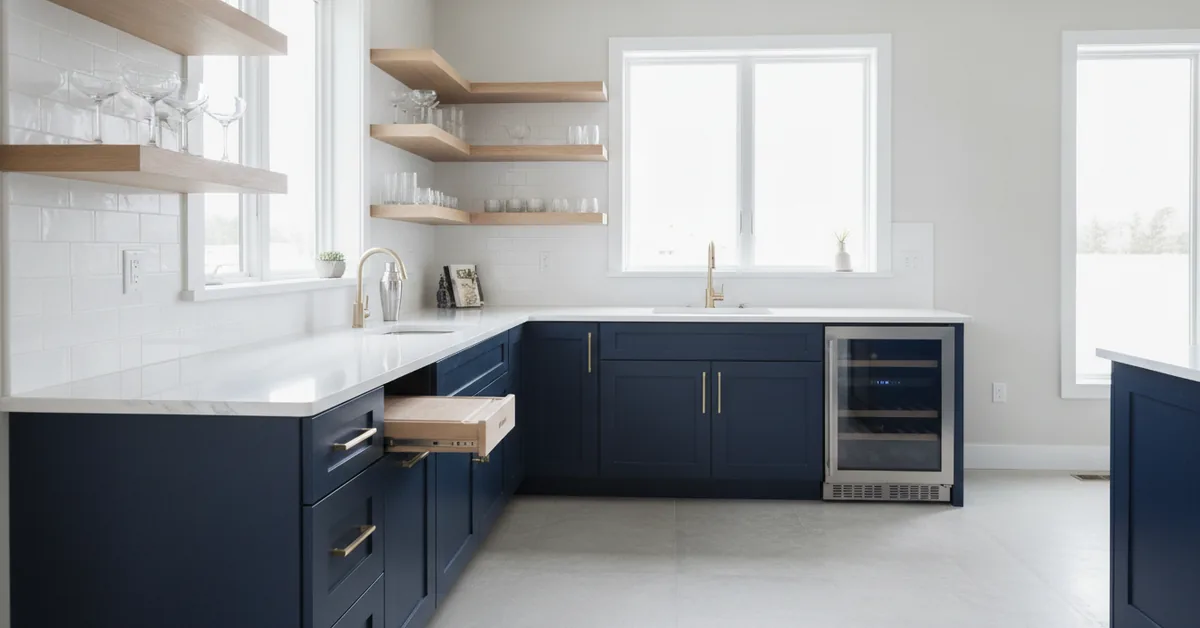
I’ve seen it countless times. A client shows me a glossy magazine photo of a home bar—sleek, minimalist, perfect. Then I visit their home and see the reality: a collection of mismatched bottles on a countertop, a mini-fridge humming in a corner, and glassware collecting dust in a kitchen cabinet. The dream of an elegant entertainment hub is often derailed not by a lack of vision, but by a misunderstanding of what makes a bar truly functional. It’s not just about looks; it's about workflow, durability, and a design that anticipates how you'll actually use the space. A beautiful bar that’s a chore to use will quickly become just another piece of unused furniture.
From Cocktail Napkin Sketch to Reality: The Four Pillars of Bar Cabinetry
Function First, Form Second: Before you pick a single finish, you must define the bar's primary role. Is it a wine
- Function First, Form Second: Before you pick a single finish, you must define the bar's primary role. Is it a wine tasting station, a cocktail-crafting hub, or a simple beverage center for the family? The answer dictates every subsequent decision, from countertop material to the type of refrigeration.
- The 'Working Triangle' of a Bar: Just like in a kitchen, a bar has a critical workflow. I call it the 'Ice-Sink-Garnish' triangle. Easy access between your ice source (freezer or ice maker), your sink for rinsing, and your prep surface is non-negotiable for a bar that's a pleasure to use.
- Material Honesty is Key: The materials you choose must withstand the unique abuses of a bar environment—spills, moisture, and frequent cleaning. A porous marble top might look stunning, but a single red wine spill can ruin it. We must match the material to the real-world application.
- Appliance Integration is Not an Afterthought: Designing cabinetry around standard appliances is a rookie mistake. We must plan for ventilation, plumbing, and electrical from day one. An undercounter refrigerator needs proper airflow, and a clear ice maker requires a gravity drain or a pump. These are the details that separate a custom build from a collection of parts.
The Anatomy of a Home Bar: Wet vs. Dry and Why It Matters
The first question I always ask is, "Will this be a wet bar or a dry bar?" The answer fundamentally changes the scope, budget, and complexity of the project. A dry bar is essentially a dedicated storage and serving station—cabinetry for glassware, bottle storage, and a countertop for pouring. It requires no plumbing. A wet bar, however, includes a sink with running water. This seemingly small addition introduces the need for a plumber and electrician, significantly impacting the construction process. For a client in a high-rise condo, running new plumbing lines can be a major undertaking, sometimes costing upwards of $3,000-$5,000 just for the mechanicals before a single cabinet is built. A wet bar is fantastic for cleanup and prep, but you must be prepared for the infrastructure investment. The presence of a sink is the single biggest factor affecting your budget and timeline.
Choosing Your Armor: Materials That Endure Spills and Celebrations
Your bar's surfaces are its frontline defense. They will see everything from sticky liqueurs to acidic citrus juice. Making the right choice here is about balancing aesthetics with rugged durability. I had a client who insisted on a beautiful, rift-sawn white oak countertop with a clear matte finish for their bar. It looked incredible for about a month. Then, after one party, it was covered in water rings and a dark stain from a red wine spill. We had to sand it down and apply a marine-grade varnish, which altered the look they originally loved. It was a hard lesson in material science. To avoid that, let’s compare the most common options.
| Material | Pros | Cons | Typical Cost (per sq. ft. installed) |
|---|---|---|---|
| Engineered Quartz | Non-porous, highly resistant to stains and scratches, consistent appearance. | Can be damaged by high heat, less natural-looking than stone. | $80 - $150 |
| Granite (Polished) | Highly durable, heat resistant, unique natural patterns. | Porous and requires sealing to prevent stains. Some varieties can be very busy. | $70 - $200+ |
| Sintered Stone (e.g., Dekton) | Virtually indestructible; resistant to heat, UV, scratches, and stains. | Higher price point, can be brittle on edges during fabrication/installation. | $100 - $220 |
| Solid Wood (Butcher Block) | Warm, classic look. Can be refinished if damaged. | Requires regular oiling/sealing, highly susceptible to water damage and stains. | $60 - $180 |
The Secret Language of Bar Cabinetry: Storage Solutions You Haven't Thought Of
Anyone can build a box. A true custom cabinet maker builds a system. For a home bar, this means thinking beyond simple shelves. We design for specific functions. For one client, a passionate mixologist, we built custom drawers with diagonal dividers, perfectly sized to lay out his collection of bitters and tinctures so he could read every label at a glance. For a wine enthusiast, we integrated a full-height, dual-zone wine column flanked by cabinetry in a dark-stained walnut to create a seamless, library-like feel. The magic is in the internal architecture of the cabinets.
- Glassware Storage: Consider stemware racks mounted under an upper cabinet to free up shelf space and keep glasses clean. For tumblers and highball glasses, deep drawers with peg-board style dividers are fantastic.
- Bottle Storage: While wine racking is common, don't forget liquor bottles. They come in all shapes and sizes. I recommend at least one tall cabinet section with adjustable shelves, providing a minimum vertical clearance of 16 inches for those oversized bottles.
- Appliance Garages: A great way to hide a blender, shaker, or other less-attractive items is with a lift-up or tambour door cabinet that sits on the countertop. It keeps the main surface clear but the tools accessible.
- Pull-Outs for Efficiency: A narrow pull-out cabinet next to the sink is perfect for storing bar tools, cutting boards, and cleaning supplies. Think of it as a vertical toolbox for your bar.
Your Action Plan: From Idea to Installation
Feeling inspired? Good. Now it's time to get practical. Transforming your vision into a functional bar requires a structured approach. Follow these steps to ensure a smooth process and a result you'll love for years to come.
- Measure and Document Your Space: Take precise measurements of the intended area. Note the locations of all electrical outlets, switches, and any potential plumbing access points. Take photos from multiple angles. This is the foundation of your design.
- Create an Inventory List: Write down everything you want to store in your bar. Count your glasses, measure your tallest liquor bottle, and list every appliance you want to include (mini-fridge, ice maker, wine cooler). Be specific with model numbers if you can. This inventory dictates the interior dimensions of your cabinets.
- Define Your Budget Realistically: A custom dry bar with mid-range materials might start around $5,000 - $8,000. A wet bar with stone countertops and premium appliances can easily exceed $20,000 - $30,000+. Knowing your financial comfort zone from the start will guide material and appliance selections.
- Gather Inspiration with a Critical Eye: Collect images you love, but analyze them for function, not just style. Look at how they handle storage, where the appliances are located, and what kind of workflow they create.
- Consult with a Professional: Engage a qualified kitchen designer or custom cabinet maker. Bring them your measurements, inventory, and inspiration. A good professional will not just quote your idea; they will challenge and refine it, pointing out potential issues and suggesting better solutions you haven't considered.
Frequently Asked Questions from My Workshop
- What's the ideal countertop height and depth for a home bar?
- For the working area of a home bar, I stick to the standard kitchen counter height of 36 inches. This allows for the use of standard-height undercounter appliances. For the depth, 24-25 inches is typical, again to accommodate appliances. However, if you have an elevated seating area (bar-height), that surface should be at 42 inches high to comfortably fit bar stools.
- Do I really need a dedicated ice maker, or is my refrigerator's ice enough?
- This depends entirely on your entertaining style. A standard refrigerator ice maker produces cloudy, crescent-shaped ice and can't keep up with the demands of a party. If you are serious about cocktails, a dedicated undercounter clear ice maker is a game-changer. It produces crystal-clear, dense ice that melts slower and looks far more professional. Be warned: they require a drain line, which adds to the plumbing complexity and cost.
- How should I plan the lighting for my bar area?
- Lighting is crucial and often overlooked. I recommend a layered approach. Start with task lighting: use under-cabinet LED strips to illuminate your work surface. Then add ambient lighting, like a pair of elegant pendants over the bar if it's an island or peninsula. Finally, incorporate accent lighting, such as in-cabinet puck lights or LED tape lighting on glass shelves, to showcase your glassware and bottle collection. Always put them on a dimmer to control the mood.