

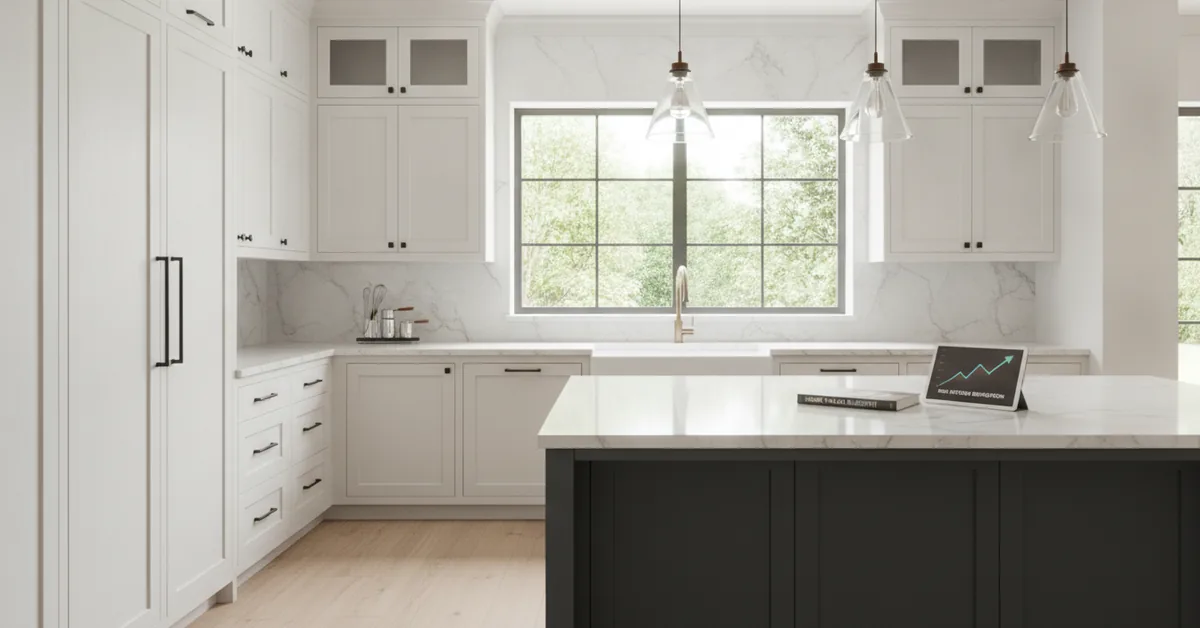
I recently walked through a home for a pre-sale consultation. The owners were proud of their kitchen remodel from five years prior, especially the “custom cabinets” they’d invested heavily in. But as I ran my hand over the finish, I saw what the appraiser would see: hairline cracks in the paint at the joints, a slight warp on a door under the sink, and a finish that had yellowed unevenly. They were told custom cabinets were a guaranteed value-add, but the reality is that the promise of increased home value isn't in the word “custom”—it's in the execution, the materials, and most importantly, how those cabinets endure over time. The real conversation isn't about installation day; it's about how they look on appraisal day.
The Real ROI: Four Pillars of Value-Adding Cabinetry
Material Integrity Over Surface Beauty: The true value lies in the core material's stability (like high-grade MDF for
- Material Integrity Over Surface Beauty: The true value lies in the core material's stability (like high-grade MDF for painted finishes) and its ability to resist environmental stress, not just its initial appearance.
- Craftsmanship is Non-Negotiable: The quality of joinery, the precision of the fit, and the layers of the finish are what separate a short-term aesthetic upgrade from a long-term asset.
- Timeless Design Trumps Fleeting Trends: A design that respects the home's architecture and avoids niche trends will appeal to a broader range of future buyers, securing its value.
- Maintenance is the Multiplier: The perceived value of custom cabinetry diminishes rapidly without proper care. A well-maintained cabinet set looks new for years, preserving the initial investment.
It’s Not Just Wood: The Unseen Battle of Materials and Finishes
Clients often come to me with a firm idea: “I want solid wood cabinets.” It’s a classic request, born from the idea that solid equals quality. But in the world of high-end cabinetry, especially for painted finishes, this can be a critical mistake. Solid wood, like maple or poplar, naturally expands and contracts with changes in humidity and temperature. In a kitchen—a room with constant fluctuations from cooking steam to seasonal changes—this movement is inevitable. Over time, it causes paint to develop hairline cracks at the joints of the cabinet doors. It’s not a defect in the paint; it’s the wood doing what wood does.
This is where the conversation about true, lasting value begins. For a painted finish, I almost always recommend a door constructed with a solid wood frame and a high-grade, furniture-quality Medium-Density Fiberboard (MDF) center panel. MDF is dimensionally stable; it doesn't move. This hybrid construction gives you the strength and feel of wood where it counts, but it ensures the painted surface remains flawless for years. This is the kind of technical decision that protects your investment long after the renovation is complete.
The Appraiser’s Eye: A Comparative Look at Cabinet Construction
An appraiser or a savvy homebuyer isn't just looking at the color of your kitchen. They are subconsciously (or consciously) evaluating quality. They open doors, feel the weight, check the alignment, and look at the finish. Below is a breakdown of what I see in my workshop and what a discerning eye will notice in your home.
| Feature | Standard “Builder-Grade” Cabinet | True Custom Cabinetry |
|---|---|---|
| Box Material | Particleboard with melamine or vinyl wrap. | 3/4-inch furniture-grade plywood with a real wood veneer interior. |
| Drawer Construction | Stapled particleboard with side-mount glides. | Solid wood (often maple or birch) with dovetail joinery and undermount, soft-close glides. |
| Door Construction | Solid wood prone to cracking, or thermofoil over MDF. | Hybrid construction (wood frame, stable MDF panel for paint) or premium solid wood for stained finishes. |
| Finish Quality | Single coat of sprayed lacquer or thermofoil wrap. | Multi-step, catalyzed conversion varnish finish, hand-sanded between coats. This provides superior chemical and moisture resistance. |
From My Workshop to Your Home: A Lesson in Finish Durability
I remember a project in a coastal home, where humidity is a constant battle. The client insisted on solid poplar doors for their white kitchen, against my strong recommendation for a hybrid door. They loved the idea of “all natural wood.” Two years later, they called me. The beautiful shaker doors had visible joint lines in the paint, and one door near the dishwasher had a slight cup to it. The cabinets were still functional, but that pristine, high-end look was gone. We ended up replacing the door fronts with the hybrid model I originally proposed.
The lesson here is that value is intrinsically linked to durability and appearance over time. A cabinet that requires constant touch-ups or shows its age quickly becomes a liability, not an asset. The initial material choice, guided by environment and intended use, is the first and most critical step in cabinet care.
Your Action Plan for Preserving Cabinet Value
If you have custom cabinets or are planning to install them, protecting their value starts now. It's not about heroic measures once a year; it's about consistent, gentle habits.
- Implement a Gentle Cleaning Routine: Never use harsh, abrasive cleaners, ammonia, or silicone-based polishes. A simple solution of a few drops of mild dish soap in a gallon of warm water, applied with a soft, lint-free cloth, is all you need. Always wipe dry immediately with a second clean cloth.
- Control Your Kitchen's Environment: Use your range hood exhaust fan every single time you cook. This isn't just for smells; it removes the grease and moisture particles that settle on cabinet surfaces and degrade the finish over time. In very humid or dry climates, maintaining consistent indoor humidity helps stabilize the wood components.
- Address Spills and Splatters Immediately: Water is the enemy of any cabinet finish. Wipe up spills, especially under the sink, right away. Don't let tomato sauce, coffee, or other acidic substances sit on the surface, as they can etch the finish over time.
- Perform an Annual Hardware Check: Once a year, check all your hinges and drawer glides. Gently tighten any loose screws. Proper alignment prevents doors and drawers from sagging, which can cause uneven wear on the frames and finishes.
Frequently Asked Questions from the Design Floor
- Is it better to reface or replace my cabinets to increase home value?
- This depends entirely on the condition of your existing cabinet boxes. If you have sturdy, plywood boxes that are in good shape, refacing with high-quality, custom-made doors and drawer fronts can be a fantastic, value-adding option. However, if your boxes are particleboard, are showing water damage, or are poorly constructed, you are simply putting a beautiful facade on a failing structure. In that case, a full replacement is the only way to truly add long-term value.
- How do I know if the finish on my cabinets is high quality and will last?
- A high-quality finish, like a catalyzed conversion varnish, feels different. It's harder and smoother to the touch than simple lacquer. Ask your cabinet maker what specific product they use and look it up. A good shop will be proud to tell you about their multi-step finishing process. A key indicator is chemical resistance; a well-finished cabinet should be able to withstand a temporary spill of vinegar or wine without immediate damage to the topcoat. Also, look for a consistent sheen across all surfaces, even inside cutouts and profiles.
- Will a niche or trendy cabinet color decrease my home's value when I sell?
- It absolutely can. While a bold navy blue or forest green kitchen can be stunning, it appeals to a much smaller pool of potential buyers than a timeless white, off-white, or sophisticated light gray. If your primary goal is maximizing resale value, your design choices should aim for broad appeal. A classic, well-executed design in a neutral palette allows new owners to envision themselves in the space. You can always add personality with hardware, lighting, and backsplash tile—elements that are much easier and less expensive for a new owner to change.