

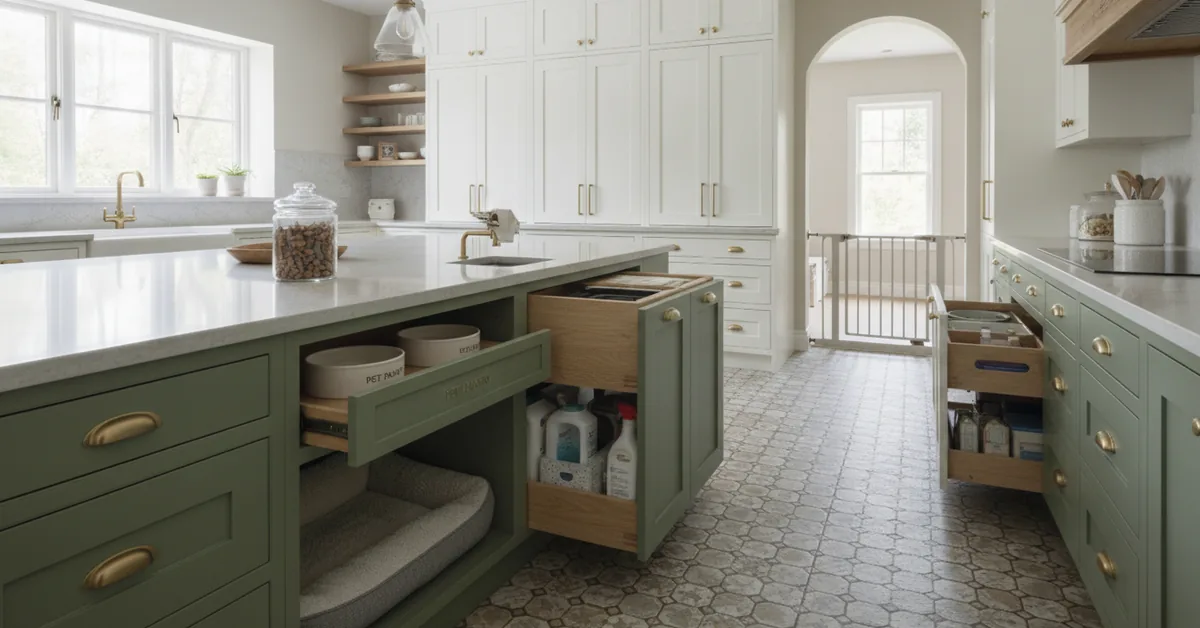
Over the years in my custom cabinet shop, I have noticed a dramatic shift in how homeowners approach kitchen design. It is no longer just about the human workflow; our pets have become central cohabitants of the culinary space. I cannot tell you how many times I have been called to repair premium white oak island panels scarred by eager claws, or to replace water-damaged toe kicks rotting from spilled water bowls. The inconvenient truth of kitchen design is that standard cabinetry is fundamentally unequipped to handle the daily wear, moisture, and spatial demands of household pets. Designing a truly pet-friendly kitchen requires moving beyond superficial fixes and engineering structural, material-focused solutions directly into the custom millwork.
The Core Pillars of Pet-Centric Kitchen Engineering
Material Resilience: Selecting closed-grain hardwoods and high-performance finishes that resist scratching, moisture
- Material Resilience: Selecting closed-grain hardwoods and high-performance finishes that resist scratching, moisture penetration, and chemical cleaning agents.
- Integrated Ergonomics: Designing built-in feeding stations and sleeping nooks that keep pet accessories out of human foot-traffic pathways.
- Safety and Accessibility: Utilizing specialized hardware and locking mechanisms to secure waste bins, cleaning supplies, and pet food from curious paws.
- Ventilation and Air Quality: Allocating dedicated, ventilated cabinet spaces for litter boxes or food storage to mitigate odors and dander accumulation.
The Material Showdown: Wood Species and Finishes That Endure claws and Slobber
When clients ask me for a pet-friendly kitchen, their first instinct is often to choose the hardest wood species available. However, hardness is only half the battle. In my workshop, I analyze how wood species react to localized moisture—like slobber or water bowl splashes—and how their grain patterns camouflage wear. For instance, open-grain woods like Red Oak can trap dirt and moisture within their deep pores, leading to dark staining over time. Hard Maple or Cherry, with their tight, closed grains, offer much better resistance to liquid penetration.
Furthermore, the choice of finish is where many custom kitchens fail. Standard lacquer finishes break down rapidly when exposed to the acidic nature of pet saliva and the abrasive scrubbing required to clean up dried food. I always recommend transitioning to a post-catalyzed conversion varnish or a multi-component polyurethane finish. These coatings cure chemically, creating an impenetrable barrier that resists both physical scratching and moisture ingress far better than traditional water-based or oil-based finishes.
| Material / Wood Species | Janka Hardness Rating | Moisture Resistance | Scratch Concealment Ability | Best Application in Pet Kitchens |
|---|---|---|---|---|
| Hard Maple | 1,450 lbf | High (Closed Grain) | Moderate (Smooth texture shows deep scratches) | Painted perimeter cabinets and drawer fronts |
| Rift-Sawn White Oak | 1,360 lbf | High (Tyloses block water) | Excellent (Strong grain pattern hides micro-scratches) | High-traffic island bases and lower cabinets |
| MDF (Medium Density Fiberboard) | N/A | Very Low (Swells when wet) | Low (Paint chips easily under claw impact) | Upper cabinets only (Avoid for lower pet zones) |
| Marine-Grade Birch Plywood | N/A | Exceptional (Waterproof glue) | Dependent on face veneer | Cabinet carcass construction near water bowls |
Designing the Integrated Feeding Station: Lessons from the Shop Floor
One of my clients in Seattle insisted on placing their dog\'s water bowl inside a standard pull-out drawer base. Within six months, the constant splashing warped the drawer bottom, rusted the undermount slides, and caused the solid maple drawer front to expand so much it wouldn\'t close. This taught me a valuable lesson: you must design for water mitigation from the ground up.
When engineering an integrated feeding station, I now build a recessed alcove directly into the toe kick or the end of an island. I line the entire interior of this alcove with a waterproof material, such as solid surface acrylic (like Corian) or stainless steel, sealing the joints with marine-grade silicone. This ensures that any splashed water is contained within an impervious zone, completely isolated from the wooden structure of the cabinetry. Additionally, I elevate the bowls slightly to reduce strain on the animal\'s joints, while keeping the platform removable for easy sanitization.
Step-by-Step Implementation Guide for Your Custom Pet Kitchen
Transitioning your kitchen layout to accommodate pets requires a structured approach during the design phase. Follow this sequence to ensure no detail is overlooked before the sawdust starts flying in the cabinet shop.
- Map the Traffic Patterns: Identify where your pet naturally prefers to rest and eat. Avoid placing feeding stations in high-volume pathways, such as the direct line between the refrigerator and the range, to prevent trip hazards.
- Specify the Cabinet Construction Specs: Demand that your cabinet maker uses marine-grade plywood or water-resistant MDF for any cabinet boxes housing water bowls or pet food. Specify soft-close, heavy-duty drawer slides rated for at least 100 lbs to handle the weight of bulk food storage.
- Integrate a Dedicated Pet Pantry: Design a tall utility cabinet with heavy-duty pull-out shelves. The lower shelves should hold airtight pet food containers, while the upper shelves organize medications, leashes, and grooming tools.
- Incorporate Safety Latches: For lower cabinets holding trash or cleaning chemicals, specify magnetic child-safety locks or integrated mechanical latches that require human dexterity to open.
- Plan for Trash and Recycling: Dedicate a double-bin pull-out cabinet for trash and pet waste disposal, fitted with a hands-free foot pedal mechanism so you can open it easily while holding your pet or a bag of waste.
The Hidden Danger of Toe Kicks and How to Reclaim Them
In standard kitchen design, the three-inch-deep by four-inch-high toe kick space is dead air. For a pet owner, this space is a magnet for pet hair, dropped kibble, and dust bunnies that are incredibly difficult to clean. In my custom builds, I reclaim this space in two ways. First, for small dogs or cats, I build custom toe-kick drawers that open with a gentle touch of your foot, revealing shallow food and water dishes that can be tucked completely out of sight when guests arrive.
If toe-kick drawers are not feasible, I recommend extending the cabinet face flush to the floor in specific zones, using a solid base molding sealed with a rubber gasket. This prevents pet hair and stray kibble from migrating under the cabinets, making daily maintenance significantly easier. It is a small detail, but it saves hours of sweep time over the lifespan of the kitchen.
Pet-Friendly Cabinetry FAQs
- How do I prevent my dog from scratching the cabinet doors when they want food?
- The key is minimizing the physical projection of the door. I recommend using slab-style or flat-panel cabinet doors rather than traditional Shaker doors with recessed panels, which have ledges that invite clawing. Additionally, applying a hard, chemically cured conversion varnish finish makes the surface incredibly slick, reducing the traction claws need to cause damage.
- Can I integrate a cat litter box inside custom kitchen cabinetry without odor issues?
- Yes, but it requires active ventilation. I design these cabinets with a small, quiet 12V exhaust fan (similar to those used in computer cases) that vents directly to the outdoors or through a carbon filter system. The cabinet interior must be lined with a non-porous material like melamine or stainless steel, and the entry hole should be cut into the side panel of the cabinet, disguised with a decorative trim.
- What is the best way to store large bags of pet food inside custom cabinets?
- Never pour the food directly into wooden drawers, as the oils from the kibble will penetrate the wood, spoil, and attract pests. Instead, design a deep pull-out drawer fitted with heavy-duty undermount slides, and size the drawer specifically to hold a removable, airtight food-grade plastic or stainless steel container. This keeps the food fresh, prevents oil absorption, and makes cleaning the container simple.